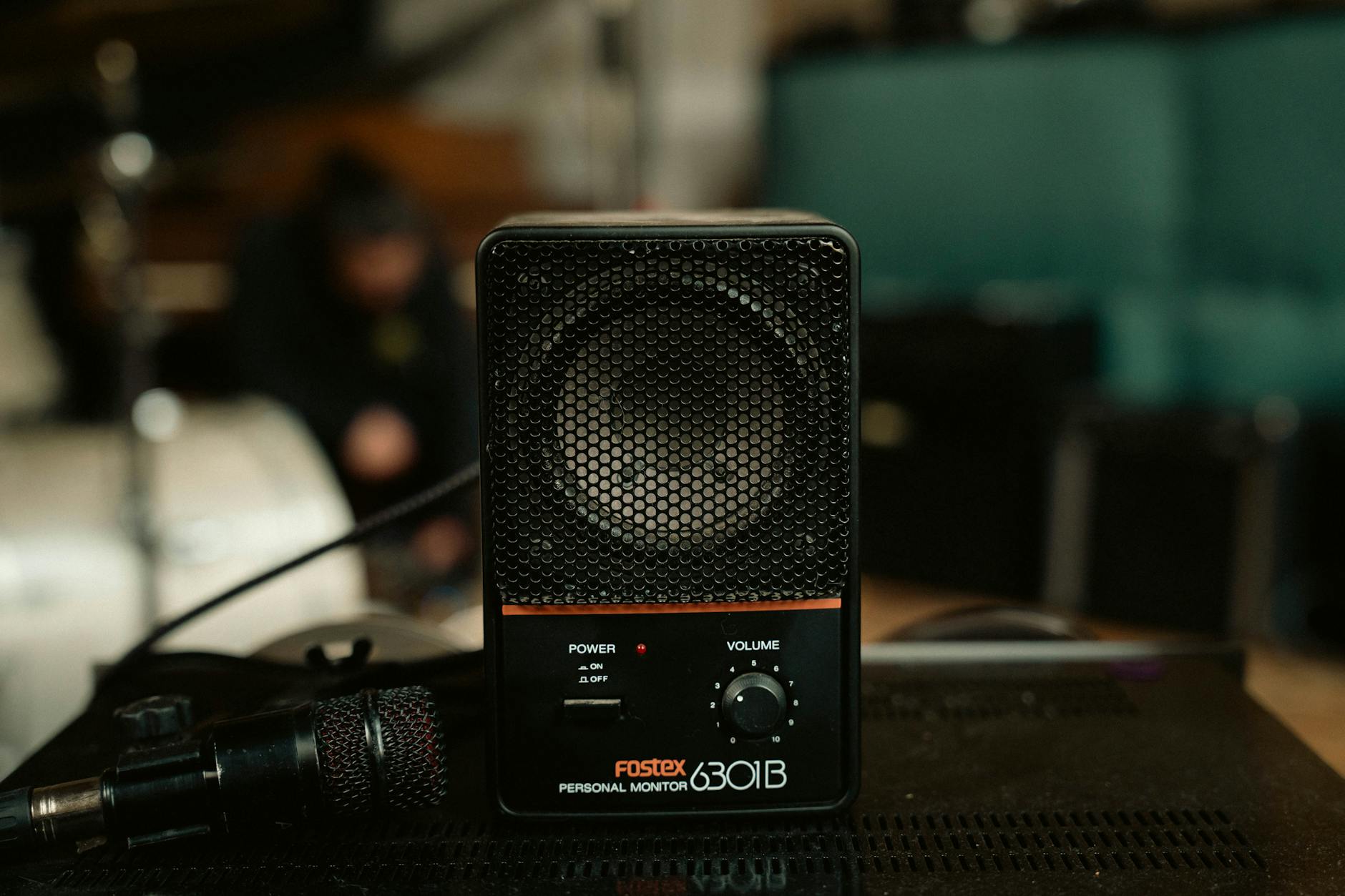
Studio monitors are marketed as neutrality — flat response, no colouration, the signal and nothing but the signal. Every manufacturer says roughly the same thing: these speakers will tell you the truth about your mix. What they won’t tell you is that the room the monitors sit in will immediately start lying on their behalf.
Acoustics are not an optional upgrade. They are the actual listening environment, and in most home studios — and plenty of professional ones — the room is doing as much to shape what you hear as the speakers themselves. Low frequencies pile up in corners. Parallel walls create flutter echo. An untreated room doesn’t give you the mix; it gives you the mix plus the room, and the two are fused in a way that’s almost impossible to separate by ear once you’re used to it.
This is why professional engineers still check mixes on car speakers, on earbuds, on cheap Bluetooth units. Not as a quirk or a backup, but because no single listening environment — however expensive — gives you the full picture. The monitor is always partial. The room is always in the way.

What bothers me isn’t that studio monitors are imperfect. Every tool is imperfect. What bothers me is the culture around them — the way upgrading speakers gets treated as the solution to mix problems that are almost certainly room problems. A £2,000 pair of monitors in an untreated spare bedroom will tell you less than a £400 pair in a properly treated space. The monitor fetishism in production communities consistently gets this backwards, because speakers are tangible and purchasable and acoustic treatment is invisible work that requires admitting your room is broken.
There’s also something worth saying about what “flat response” actually means in practice. A monitor with a genuinely flat frequency response played in a real room will not produce a flat listening experience. The physics don’t allow it. So the promise of neutrality is made by the manufacturer and immediately broken by reality, and most people buying monitors know this and buy them anyway, because the alternative — seriously addressing the room — requires effort that doesn’t come in a box.
The monitor isn’t the truth. It’s your best available approximation of it, filtered through plasterboard and corner modes. Treating it as anything more is how you end up with a mix that sounds perfect at your desk and falls apart everywhere else.