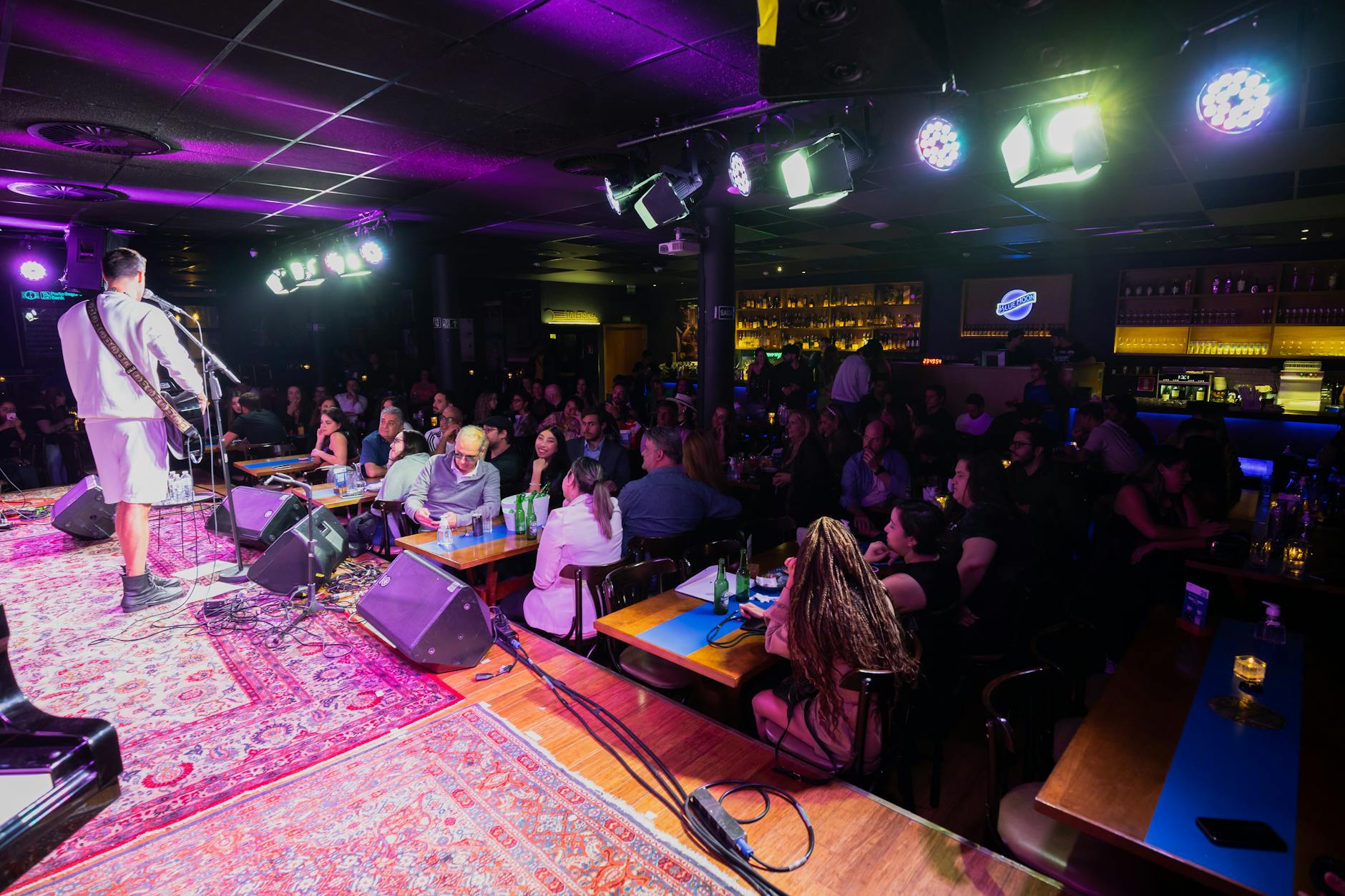
The two halves of a set break are not the same thing. The first five minutes belong to the room exhaling — drinks ordered, phones checked, the slight disorientation of being returned to ordinary air after forty minutes of sustained sound. But somewhere around the ten-minute mark, something reorganises. People who came alone are talking to strangers. Couples who spent the first set in their own worlds are now making eye contact with the couple next to them. The bar staff move faster and everyone’s slightly louder than they should be, not because they’re drunk, but because the music has loosened something and nobody wants it to tighten back up yet.
This is the part nobody writes about, because it doesn’t happen on stage. But it’s the part that determines whether a show becomes a memory or just an event you attended.
There’s a specific social contract that forms in a venue before the headliner returns. The audience, left to its own devices, starts functioning like an ensemble — not consciously, but structurally. Someone near the bar makes a loud observation about the support act. Someone ten feet away responds without being introduced. A small cluster forms. This is the set break as its own improvised performance, with the room as the instrument and the ambient noise of a working sound system as the rhythm section. Nobody is trying to do this. It just happens when you put a few hundred people in a room with no passive entertainment and a shared recent experience.
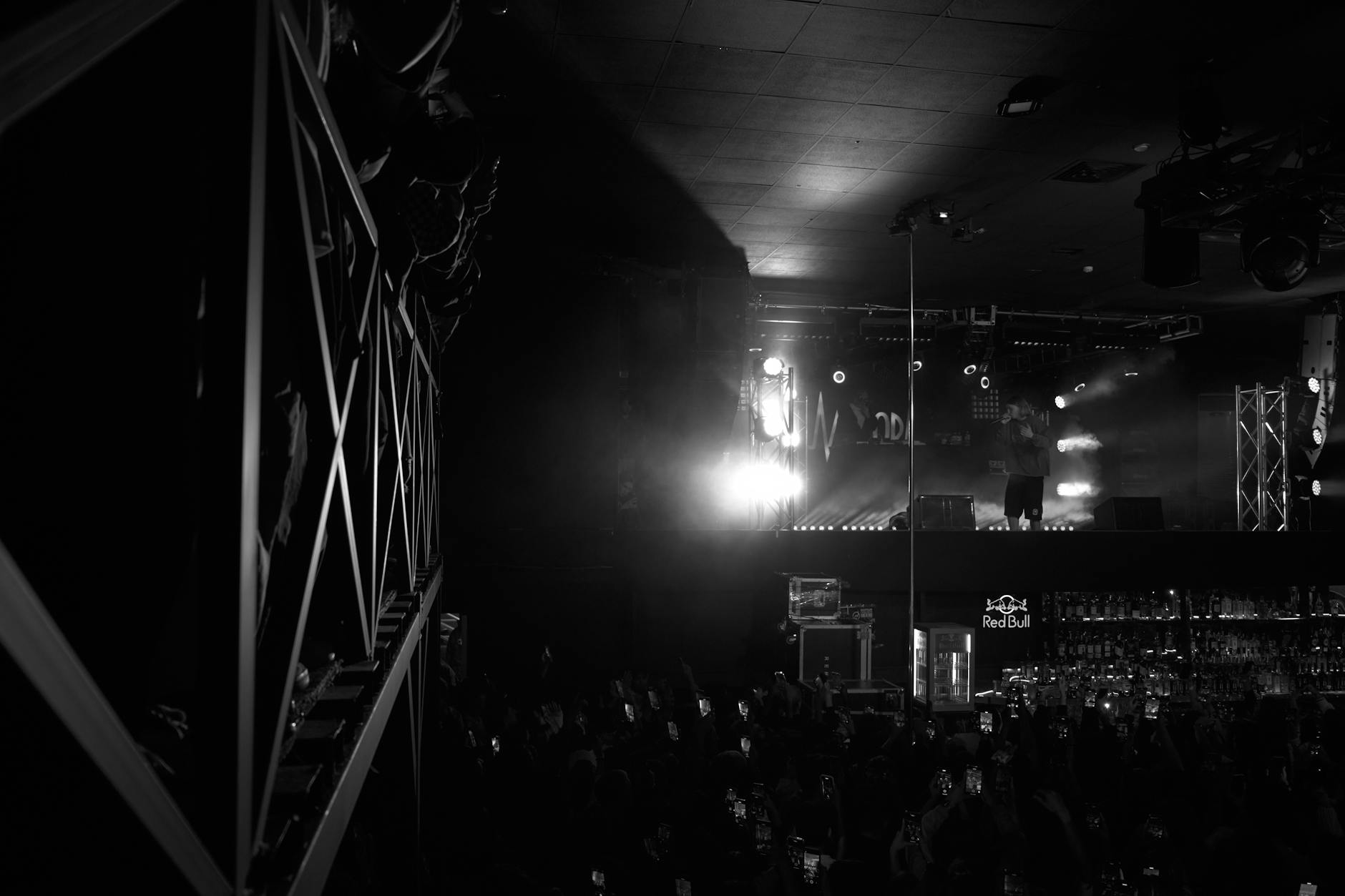
The venues that understand this leave the room’s energy alone during the break. They don’t pipe in playlist music at the same volume as the headliner. They don’t turn the house lights all the way up. The better ones know that a half-dark room with low background noise is a room where strangers keep talking, and strangers who keep talking are audiences who actually care by the time the second set starts.
The ones that get it wrong — full fluorescent lights, chart pop between acts, bar staff shouting over it — effectively reset the room to zero. You walk back in and it’s a different crowd. The ensemble dissolved.
I’ve seen extraordinary second sets fall flat because the break killed what the opener built. And I’ve seen middling headliners walk out to rooms so charged by their own interval that the music almost didn’t matter. Almost.