
There’s a particular kind of mastery that gets punished by its own success. The bass player who locks in so perfectly with the kick drum that the whole track feels inevitable — not exciting, just right — will never get the credit the guitarist gets for the solo nobody asked for. This is the deal bassists make, usually without being told they’re making it.
James Jamerson recorded most of his Motown basslines lying on his back on the studio floor. He rarely received label credit during his lifetime. The lines he played on tracks like “Bernadette” and “I Was Made to Love Her” are studied in music schools now, but for years the name most people associated with those records was the vocalist’s. Jamerson was the architecture; everyone else got to be the view.
This isn’t a Motown-specific problem. It’s structural. The way most music is mixed, bass sits below the threshold of conscious attention. You feel it before you hear it, which means your brain files it under atmosphere rather than performance. Turn it off and the track collapses. Turn it up and suddenly it sounds wrong, too exposed, like someone left a door open. The sweet spot is invisibility, and invisibility doesn’t generate appreciation.
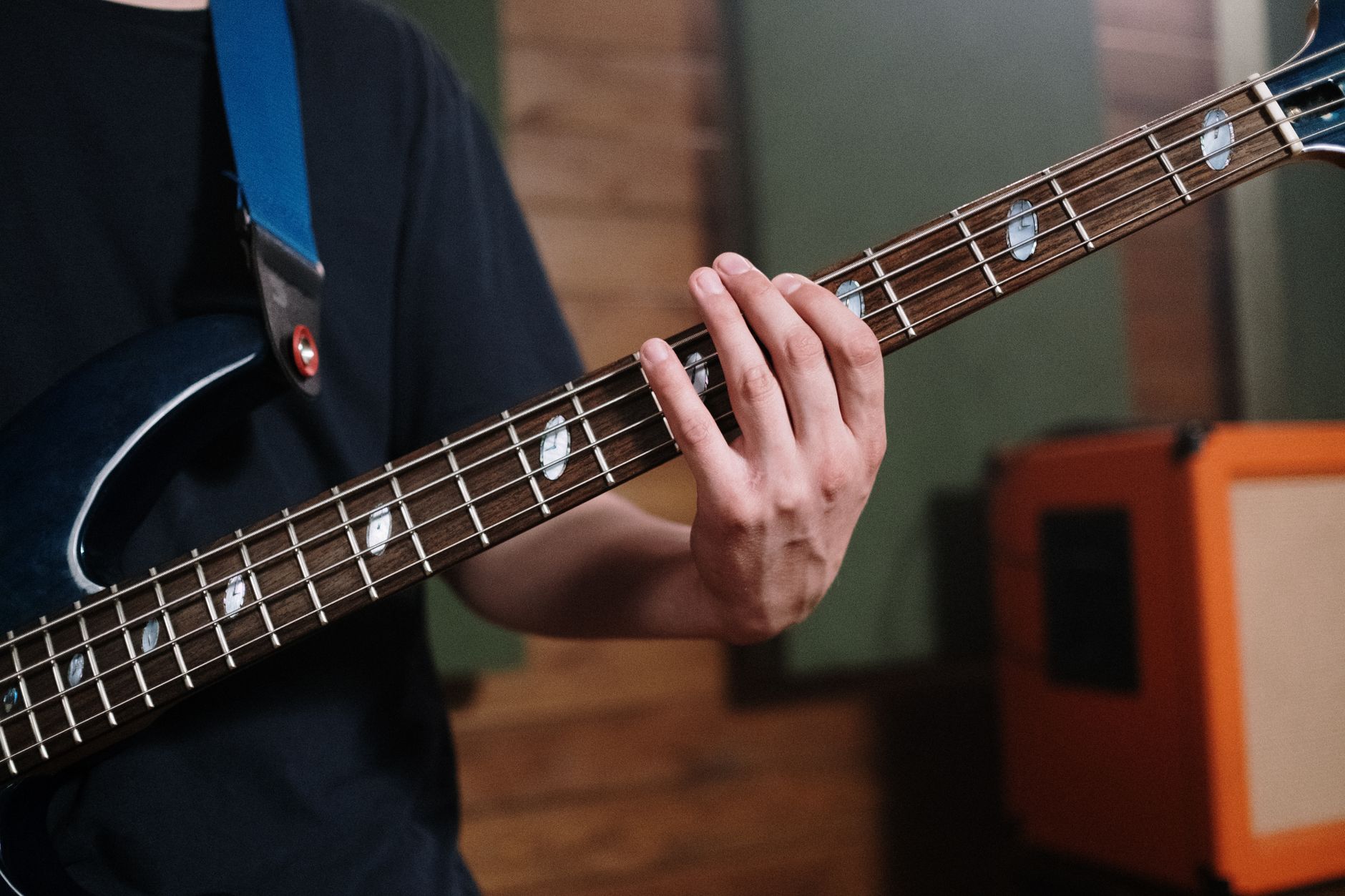
What makes this stranger is that bass is one of the hardest instruments to play well at a high level. Not hardest to start — a root-note pattern on four strings is learnable in an afternoon — but hardest to play with genuine musicality inside a band context. The bassist has to track the drummer’s kick pattern, anticipate the chord changes, leave space for the vocalist to breathe, and do all of this while sounding like they’re not thinking about any of it. Guitar heroes get to react. Bassists have to already be there.
Pop music’s shift toward programmed bass hasn’t helped. When a synth bass replaces a player, the line usually gets simpler because simplicity is easier to program convincingly. So casual listeners grow up hearing bass as a function rather than a voice, and the expectation hardens.
The listeners who do hear it — really hear it — tend to be musicians themselves, or people who’ve had one specific moment where a bassline broke through. That moment is hard to engineer and impossible to predict. It usually happens late at night, headphones on, and you’re not even sure at first what changed.