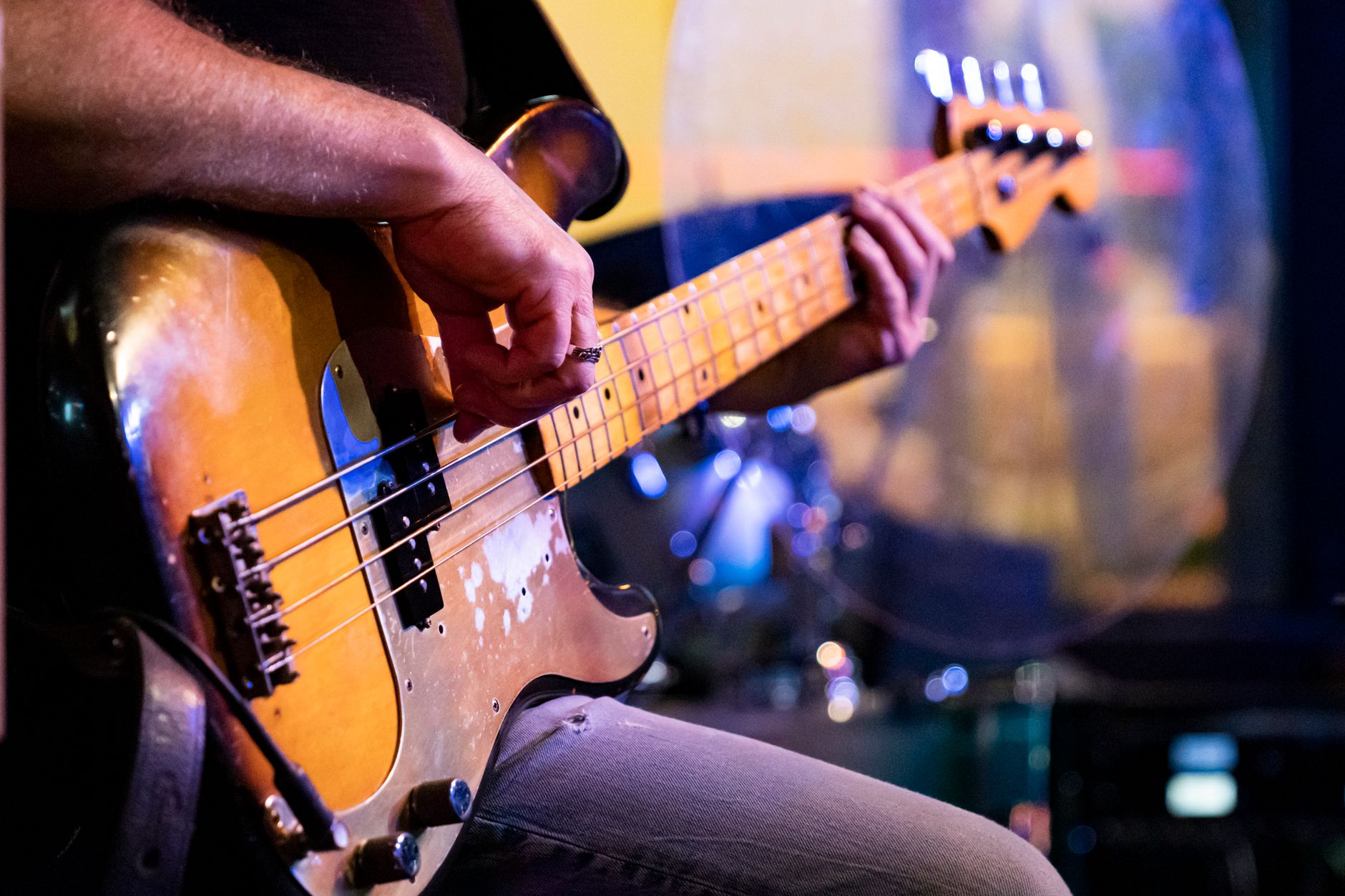
There is a particular kind of bass player — usually self-taught, usually very fast — who treats every song as an audition. They fill the spaces between beats with runs, ghost notes, slaps that nobody asked for. They’ve learned technique without learning when to put it down.
This is not a knock on technical ability. Jaco Pastorius had more technique than most players will ever approach, and he knew exactly when silence was the right choice. The issue is the assumption that more activity means more contribution. In bass playing, almost the opposite is true.
The Low End Holds the Room
Bass exists in a frequency range that people feel before they consciously hear it. When it locks in with the kick drum, it creates a physical sensation — the thing that makes a room feel full even before the guitars come in. That effect requires consistency. It requires trust in repetition. A bassist who constantly varies the pattern to demonstrate range is actively working against the thing that makes bass playing powerful.
James Jamerson, who played on an enormous number of Motown recordings in the 1960s and 70s, understood this completely. His lines had personality and movement, but they served the song’s pulse first. He never seemed to be performing for the other musicians.

Why It Keeps Happening
Bass is chronically undervalued as a lead instrument in how it’s mixed and discussed, and overcompensation is the predictable response. If you spend years being told your instrument is the boring one, you start trying to prove otherwise at every opportunity. The instinct is understandable. The result is still disruptive.
The correction isn’t to play simpler. It’s to understand that a well-placed note at the right moment lands harder than a run of ten. Pocket playing — the term used for bass that sits tightly inside the groove — is not the absence of skill. It’s the most demanding version of it, because there’s nothing to hide behind.
The Short Version
Everyone notices when the bass player overplays. Nobody notices when the bassist holds the room together quietly for forty minutes — which is exactly the point.
The bassists who learn that early tend to get called back. The ones who don’t are still working on their slap technique.