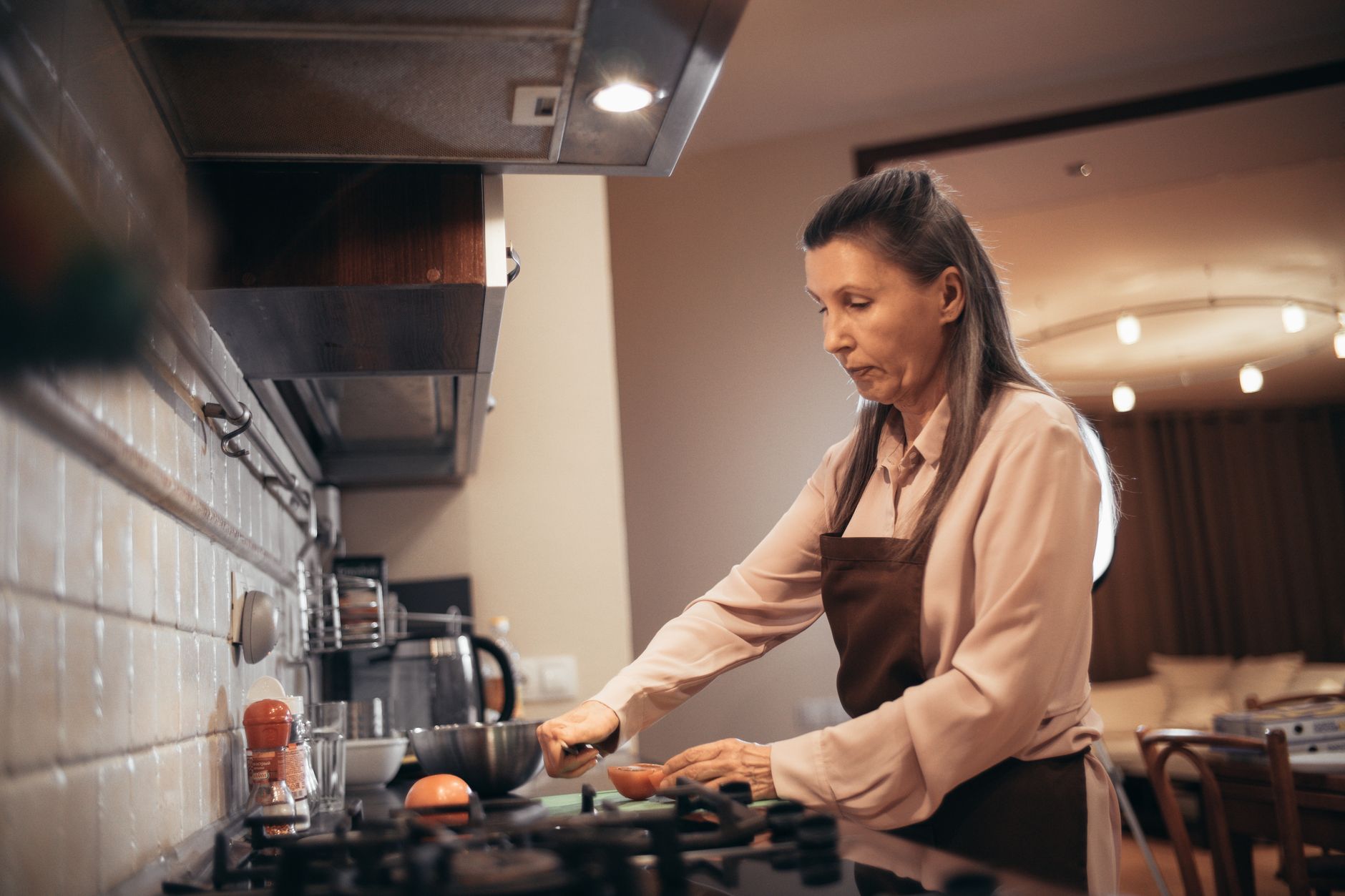
Some records aren’t for listening. They’re for the forty minutes when you’re chopping onions and no one’s watching.
There’s a specific kind of album that only works in this context — not background music exactly, but not active listening either. Something that fills the kitchen the way warmth does. For me it’s been Talk Talk’s The Colour of Spring for about three years running. Not their more celebrated later work. That particular one, at that particular volume, while something is reducing on the back burner.
The ritual has rules, though I’ve never written them down before now. It has to be an album, not a playlist — the sequencing matters, because the whole point is surrendering to someone else’s pacing for a while. It can’t be anything I’m trying to evaluate or catch up on. New releases don’t work here. Neither does anything I feel I should appreciate more than I do. The cooking album has earned its place through repetition, not aspiration.
There’s also something about the physical occupation of your hands that changes how music lands. When you’re not doing anything, you listen at a record. When you’re doing something low-stakes and slightly mechanical — dicing, stirring, waiting — the music gets in through a different door. You stop tracking it consciously and start just existing inside it. This is not a profound observation. Anyone who’s ever washed dishes to a record they love already knows this.
What I find harder to explain is the possessiveness around it. I don’t play my cooking album when other people are in the flat. It’s not that I’m precious about it — it’s that the whole thing depends on a particular quality of aloneness. An audience of one, doing something ordinary, not performing any kind of listening.
The album doesn’t need to be long. It needs to be long enough — to outlast the prep, to still be going when you sit down, so there’s a moment where you have to decide whether to let it finish or eat in silence.
I always let it finish.