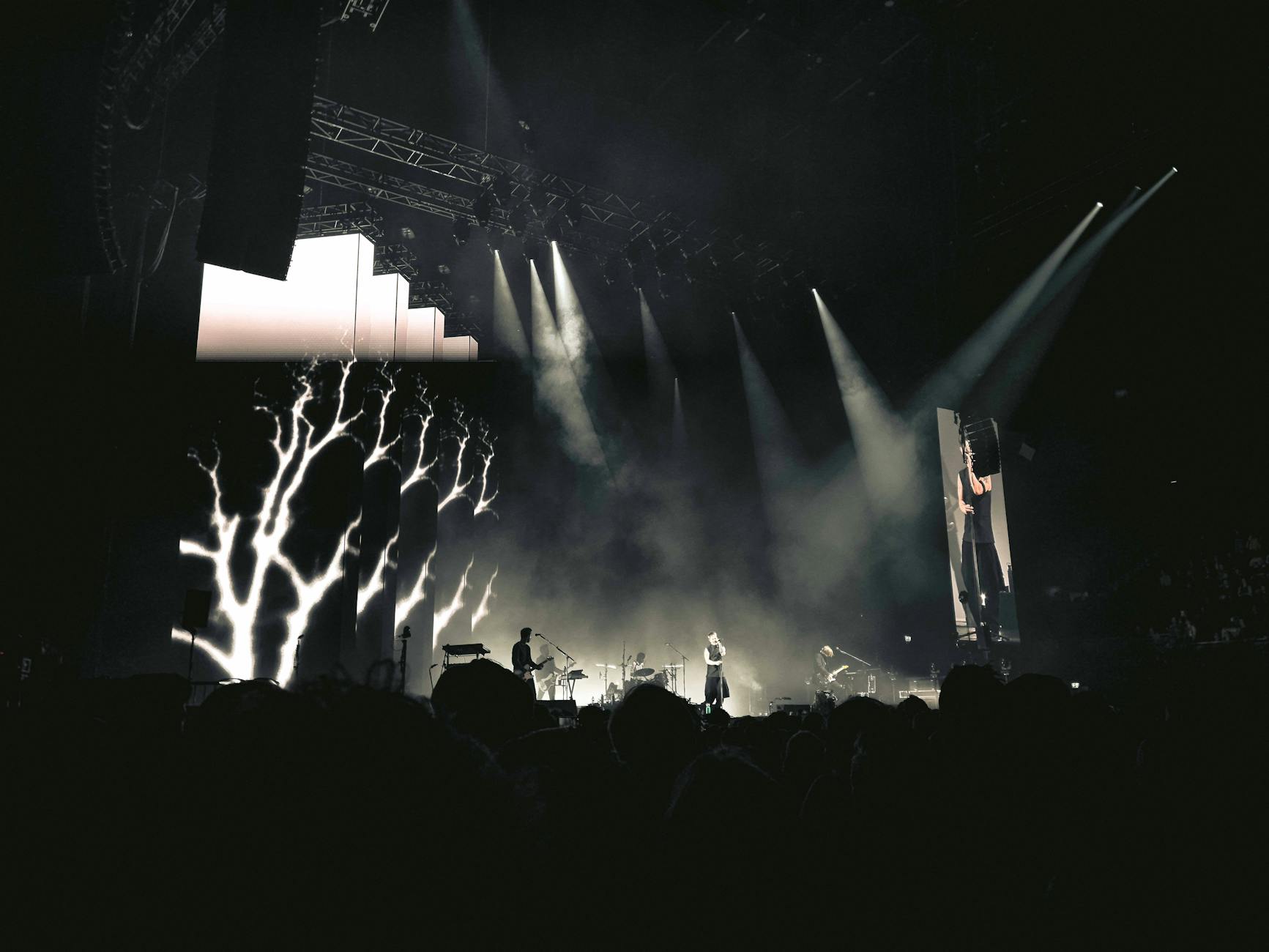
The two minutes between songs when a guitarist retunes tell you more about a crowd than anything that happens when the music is playing.
There’s a specific silence that falls when the headliner stops mid-set to fix a string that’s gone flat. No banter, no filler chord — just the sound of a single note being wound up in small increments while a few hundred people stand there holding their drinks. Some crowds fill it immediately with phone screens. Others stay exactly where they were, locked in, almost like they’re afraid to exhale in case they break something.
That second kind of crowd is the one worth playing for.
What the Gap Reveals
A tuning break is unscripted downtime, and it’s brutal because there’s nothing to hide behind. The lighting rig goes static. The front-of-house engineer has nothing to push. The performer is, for a moment, just a person with an instrument that isn’t cooperating. What happens in that gap is entirely about the relationship between the room and the stage — and you can feel whether it’s real or transactional.
At a Phosphorescent show at a mid-sized theatre a few years back, Matthew Houck stopped twice to retune an acoustic guitar and both times the room went churchlike. No one shouted a song title. No ironic cheering. People just waited, and the waiting felt like part of the performance. By contrast, at plenty of louder, more produced shows, the same gap fills instantly with the sound of an audience remembering it’s bored.
The Compere Reflex
Some musicians can’t handle the silence and try to talk through it. This is almost always a mistake. The patter rarely lands — it’s improvised by someone whose hands are occupied and whose attention is split — and it does nothing except remind everyone that a gap exists. The better instinct, the one that separates performers who trust their audience from ones who don’t, is to let the gap be a gap.
There’s real information in how a room holds silence. Festivals almost never produce it — there’s too much ambient noise, too much movement, too many people who arrived for a different act. The tuning break as a meaningful pause belongs to the theatre show, the church venue, the seated club night where something is actually at stake.
The lights come back up. The note holds. Someone in the third row nods once, satisfied. That’s the show.