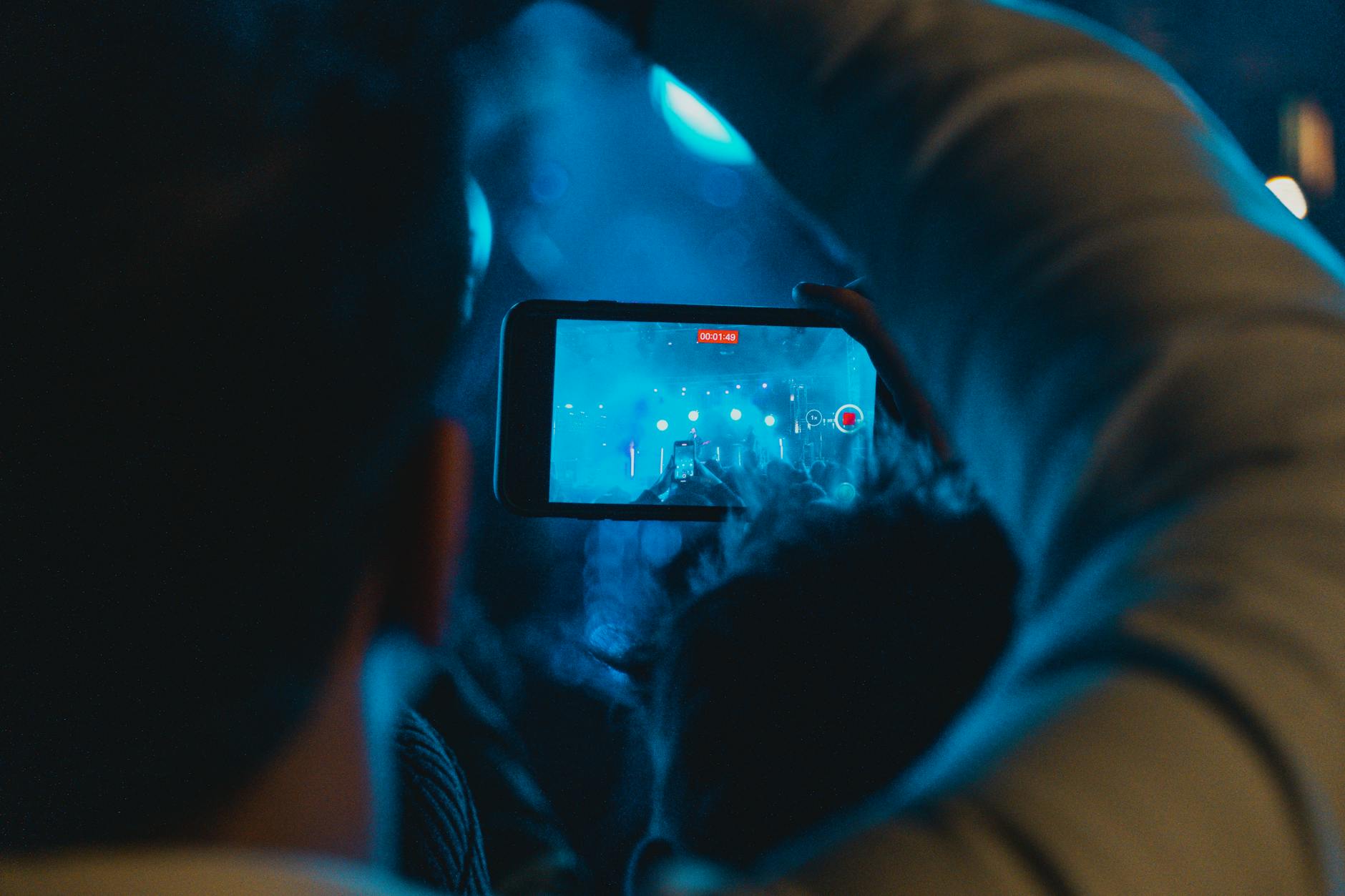
There’s a specific kind of grief that happens when you watch your own phone footage from a show you loved. The sound is blown out, the stage is a smear of light, and the moment you were apparently trying to capture has been completely flattened. What’s strange is that you remember the show as vivid and enormous — and then you watch the clip and can’t find any of that in it.
This isn’t a new observation, but the conclusion people draw from it usually stops too early. The standard take is that we should put our phones away and be present. That’s not wrong, exactly, but it treats filming as a distraction from experience rather than what it’s actually become: a parallel experience that runs alongside the show and progressively colonises it.
Filming is its own activity, with its own cognitive demands. Framing a shot, deciding when to start and stop, watching the stage through a screen rather than directly — these aren’t neutral acts. They redirect attention, and they do so in a way that feels purposeful enough to register as engagement. You’re doing something. You’re not zoning out. But what you’re doing is not the same as watching a performer in front of you without mediation.
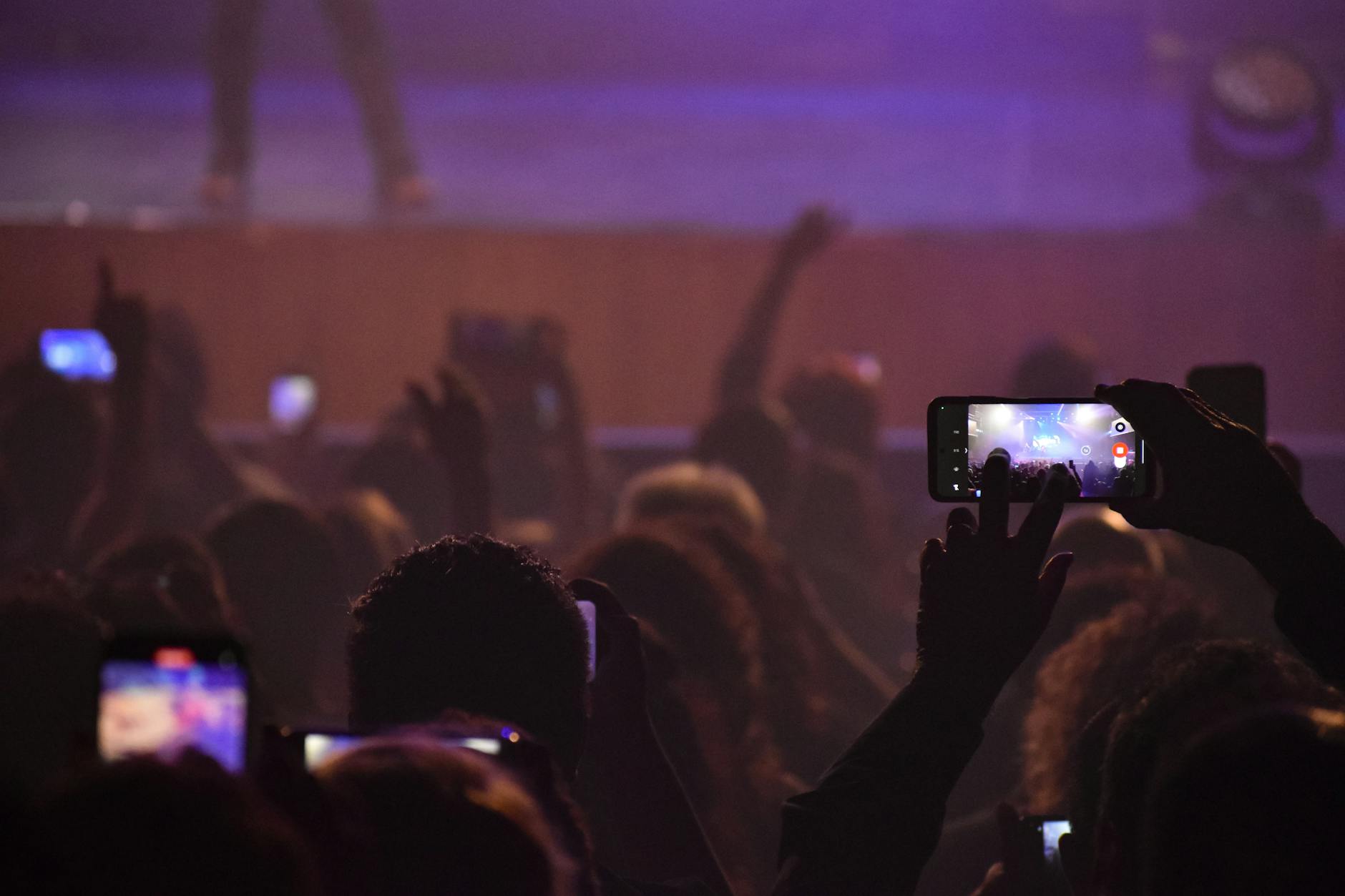
The grief at the footage comes from this gap. What the phone recorded and what you experienced were never the same event. The phone was at a different show.
What’s shifted in the last few years isn’t the behaviour itself — people have been filming concerts since phones could do it — but the social infrastructure around it. The footage is now immediately shareable, immediately legible within a platform’s aesthetic logic, and almost immediately obsolete. A clip from a show last Saturday is culturally stale by the following Thursday. The filming was never really about the footage. It was about the act of participating in a documentation economy that most people are barely conscious of joining.
The phone goes up not to remember but to transmit — to signal presence, to contribute to a collective archive that nobody curates and almost nobody returns to. The memory is a byproduct, and not a very good one.
What’s actually being lost in this exchange is harder to articulate than ‘presence.’ It’s something closer to the unwitnessed experience — the thing you saw that nobody else will ever verify, that existed only between you and the room.